

Workflow Automation for Time-Boxed, Repeatable Work
When critical work must be completed on a schedule, manual processes eventually become the bottleneck.
The Problem
Many organizations rely on repeatable processes that must be completed within defined time windows:
- Monthly, quarterly, or annual cycles
- Client or order-specific variations
- Multiple handoffs across teams
- High consequences if deadlines are missed
In many cases, these processes are managed with spreadsheets, emails, and manual coordination.
That approach works until volume increases or timing becomes critical.

Why This Is Harder Than It Looks
Repeatable work often depends on:
- Expertise
- Judgment
- Consistency
- Timing
Spreadsheets and shared folders aren’t designed to:
- Track progress across many parallel workflows
- Coordinate tasks across people
- Highlight what’s at risk before it’s too late
Traditional CRM systems focus on selling, not executing deadline-driven work.
How We Approach It
When the same work must be completed on the same deadlines over and over, consistency becomes the constraint.
We design systems that treat deadline-driven work as a repeatable process, not a collection of reminders, task lists, or one-off projects.
Instead of relying on tribal knowledge or manual coordination to hit the same deadlines over and over, we focus on giving each cycle of work a repeatable structure that scales as volume increases.
That means:
Defining clear work windows, deadlines, and milestones
Standardizing the workflow while allowing for controlled exceptions
Automating handoffs, notifications, and task progression
Making bottlenecks and missed steps visible as they happen
Supporting growth in volume without adding proportional staff
The goal is to turn time-boxed work into a reliable, repeatable operation. One that can grow without increasing stress, last-minute fire drills, or dependency on a few key people.
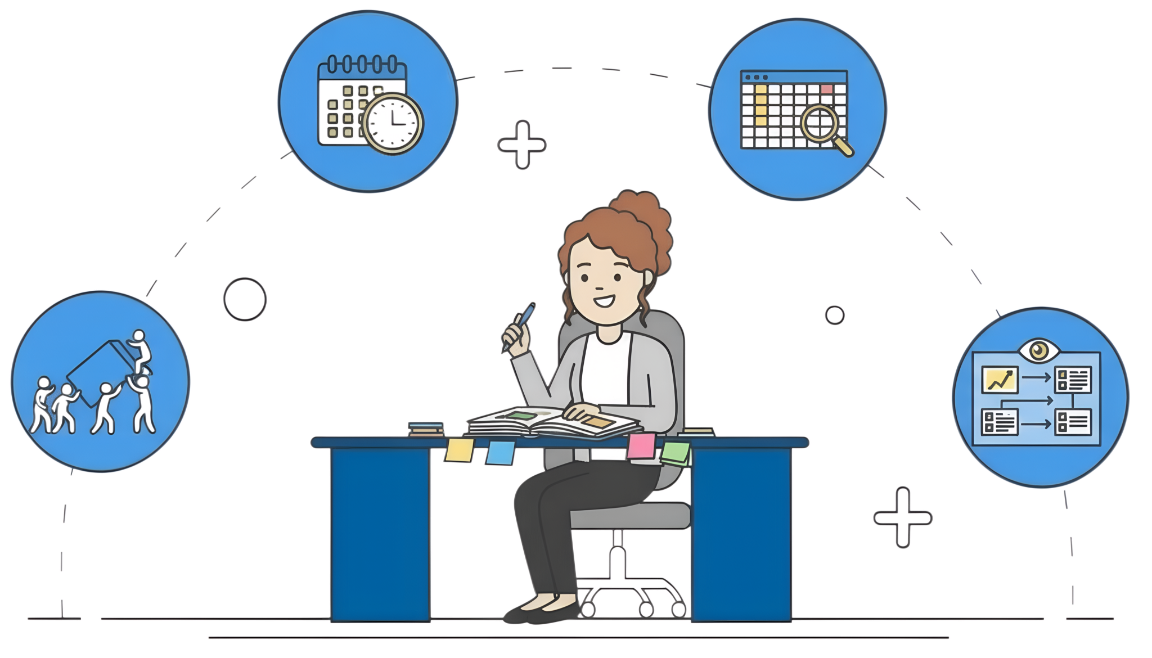
Defined work windows and deadlines
Repeatable, standardized workflow
Automated handoffs and task progression
Bottleneck and exception visibility
Scale without adding staff
The result is a system that turns deadline-driven work into a repeatable operation without relying on constant oversight or last-minute fire drills.
Who This Is For
This solution is a strong fit for organizations that:
- Run cyclical or deadline-driven processes
- Rely heavily on spreadsheets
- Struggle to scale without adding headcount
- Need better visibility into work-in-progress
Industries vary. The pattern is consistent.
One Example of How This Works in Practice
We’ve applied this approach in environments where teams must complete the same core process repeatedly under tight time constraints.

In one example, a team responsible for recurring, time-sensitive work needed a better way to:
- Track progress across many parallel efforts
- Coordinate tasks across multiple people
- Ensure deadlines were consistently met
By moving the process out of spreadsheets and into a structured workflow, they were able to scale volume without adding staff or increasing risk.
This same pattern shows up frequently in manufacturing workflows, approvals, and internal coordination.
How We Build These Systems Today
These workflows are built on a modern CRM and automation platform that supports:
- Configurable processes
- AI-assisted automation
- AI-assisted insights
- Integration with existing systems
The system supports execution. It doesn’t replace expertise.
See How This Works in Practice
Short examples showing how structured work can be managed without forcing it into standard CRM cases.

A CRM process flow that supports one of our larger clients’ most critical roles, the Master Data Manager.
A real-world look at replacing email-driven approvals with structured, auditable workflows.
A real-world example of building email-based approval workflows that maintain visibility and control within Dynamics 365.
These examples show how repeatable, deadline-driven processes can move out of spreadsheets and into systems that scale.
How This Gets Built
Solutions like time-boxed workflow automation require custom development tailored to your specific processes and deadlines.
This is typically delivered through P2 Managed Services:
- We design the system around your actual recurring workflows (not generic templates)
- Build custom task sequences, deadline tracking, and automated escalations
- Create approval processes and handoffs specific to your team structure
- Integrate with calendaring, notification, and operational systems
- Provide ongoing optimization and support as your workflows evolve
Managed Services means we become your CRM team. Handling strategy, development, and ongoing refinement so you can focus on running your business.
Looking for proven operational tools instead?
If you don’t need custom workflow automation and just want better day-to-day CRM tools, explore P2 Control Layer. Productized solutions like View Scheduler, Activity Center, and P2 Tags with transparent monthly pricing.
Ready to Automate Time-Boxed Work?
Whether you need custom workflow development (Managed Services) or proven operational tools (P2 Control Layer), we can help.