

Complex Fulfillment & Kit Management
When orders depend on components, priorities, and timing, visibility becomes critical.
The Problem
Some organizations sell products that are made up of other products. Kits, bundles, or assemblies.
Common challenges include:
- Orders that are almost fulfillable
- Inventory shortages in unexpected places
- Rush requests disrupting standard workflows
- Manual prioritization decisions
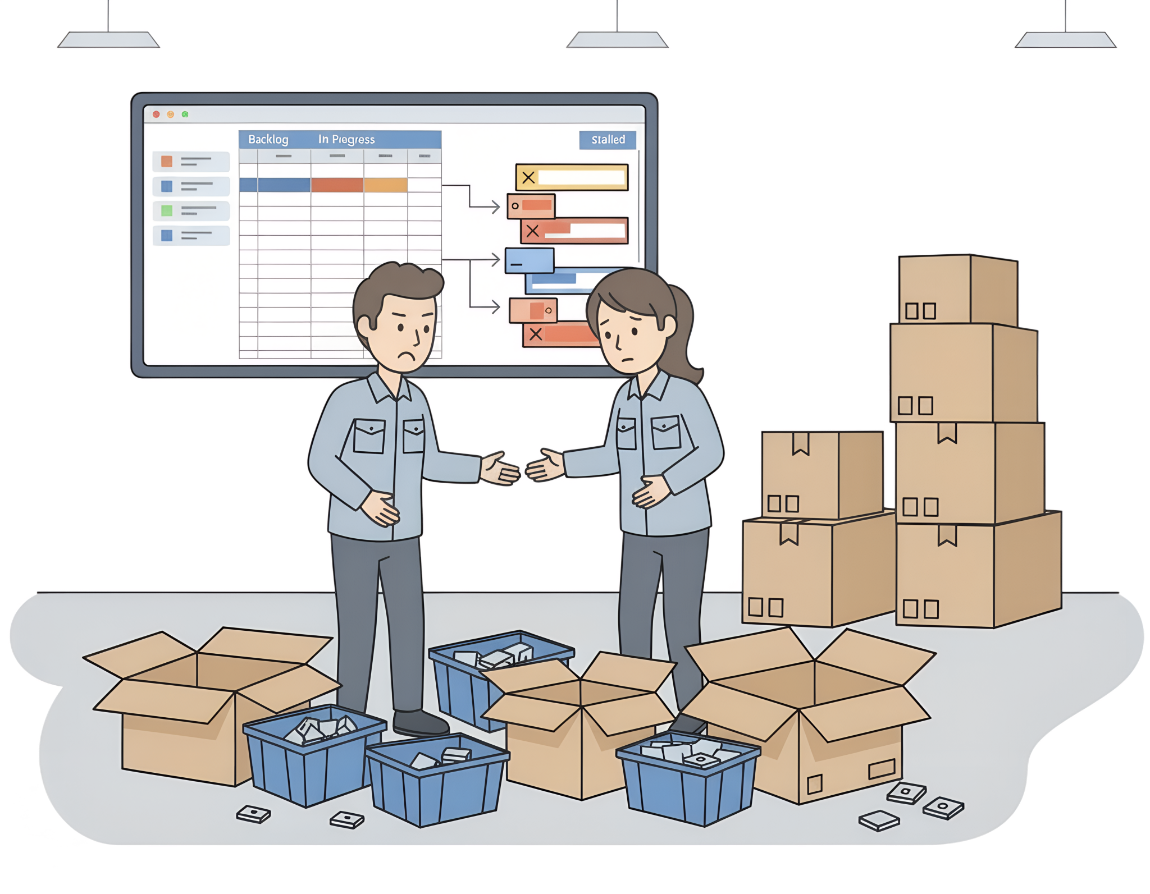
On paper, inventory exists.
In practice, fulfillment stalls.
Why This Is Harder Than It Looks
Component-level fulfillment introduces complexity:
- Partial availability
- Dependencies between items
- Competing priorities
- Constant tradeoffs between speed and efficiency
Traditional systems often lack the visibility needed to make good decisions quickly.
How We Approach It
Complex fulfillment breaks down when dependent parts are managed independently.
We design systems that treat fulfillment as a coordinated process, not a series of isolated inventory transactions.
Instead of managing kits, components, and shipments in isolation, we focus on modeling the dependencies between items, so work only moves forward when everything required is actually ready.
That means:
Defining kits and assemblies as structured sets of components
Tracking inventory dependencies and prerequisites explicitly
Preventing partial or premature fulfillment that creates downstream issues
Coordinating picking, staging, assembly, and shipment as a single flow
Providing clear visibility into readiness, blockers, and fulfillment status
The goal is to reduce stalled work, partial shipments, and wasted effort by ensuring that everything required to fulfill an order moves together or not at all.
Kits made up of multiple components
Inventory dependencies and prerequisites
Partial fulfillment and blocked shipments
Coordinated picking, staging, and assembly
Visibility into fulfillment status and readiness
The result is a system that keeps fulfillment moving smoothly, by ensuring everything required is ready before work moves forward.
Who This Is For
This solution is a strong fit for organizations that:
- Sell kits, bundles, or assemblies
- Manage dependent inventory
- Handle competing fulfillment priorities
- Need better visibility into constraints
Industries vary. The fulfillment challenge is shared.

One Example of How This Works in Practice
We’ve applied this fulfillment pattern in environments where small shortages can delay large orders.

In one example, a team managing complex assemblies needed better visibility into component availability and a way to prioritize work intelligently.
By coordinating inventory, orders, and priorities in one system, they reduced bottlenecks and improved delivery without adding manual oversight.
This same pattern appears frequently in manufacturing, sample fulfillment, and internal production workflows.
How We Build These Systems Today
These solutions are built on a modern CRM and automation platform that supports:
- Inventory-aware workflows
- AI-assisted prioritization
- AI-assisted analytics
- Integration with ERP and operational systems
Technology supports smarter decisions, not just faster ones.
See How This Works in Practice
Short examples showing how structured work can be managed without forcing it into standard CRM cases.

These examples show how visibility and prioritization improve when fulfillment is treated as a coordinated system.
How This Gets Built
Solutions like complex fulfillment and kit management require custom development tailored to your specific products and dependencies.
This is typically delivered through P2 Managed Services:
- We design the system around your actual kits, components, and fulfillment logic
- Build custom inventory coordination, prioritization rules, and exception handling
- Create workflows that prevent partial shipments and stalled orders
- Integrate with inventory management, warehouse, and ERP systems
- Provide ongoing optimization and support as your product mix evolves
Managed Services means we become your CRM team. Handling strategy, development, and ongoing refinement so you can focus on running your business.
Looking for proven operational tools instead?
If you don’t need custom fulfillment workflows and just want better day-to-day CRM tools, explore P2 Control Layer. Productized solutions like View Scheduler, Activity Center, and P2 Tags with transparent monthly pricing.
Ready to Solve Complex Fulfillment?
Whether you need custom kit management (Managed Services) or proven operational tools (P2 Control Layer), we can help.