

Case & Work Lifecycle Management
When work is complex, multi-stage, and deadline-driven, spreadsheets and email quickly fall apart.
The Problem
Many organizations manage work that looks like this:
- Each request, order, or issue has its own set of details
- Work moves through multiple stages and approvals
- Tasks are handled by different people at different points
- Documentation and supporting files matter
- Missing a step or deadline has real consequences
In practice, this kind of work often lives across:
- Spreadsheets
- Email threads
- Shared drives
- Tribal knowledge
It works — until volume increases, requirements tighten, or accountability really matters.

Why This Is Harder Than It Looks
This isn’t just about tracking customers or transactions. It’s about managing a unit of work as it evolves over time.
That unit might be:
- A customer service issue
- A quality or compliance case
- An internal change request
- A production exception
- A regulated process
Traditional CRM systems are designed around sales activity – not operational execution.
They’re not built to manage work with structure, dependencies, and accountability.
How We Approach It
We design systems that treat work itself as a first-class business object.
Instead of forcing work into generic CRM constructs or rigid templates, we focus on giving each unit of work the structure it actually needs to move forward reliably.
That means:
Defining clear stages so everyone understands where work stands
Establishing ownership so responsibility is never ambiguous
Supporting approvals and handoffs without relying on email
Keeping documentation connected to the work it supports
Making status, bottlenecks, and exceptions visible as work progresses
The goal is to bring structure and accountability to complex work — while still allowing flexibility where judgment and experience matter.
A centralized record for each unit of work
Clear stages, ownership, and deadlines
Structured task and approval workflows
Supporting documentation tied directly to the work
Visibility into status, bottlenecks, and exceptions
The result is a system that brings clarity and accountability to complex work — without forcing it into rigid, one-size-fits-all processes.
Who This Is For
This type of solution is a strong fit for organizations that:
- Manage work through defined stages
- Rely on approvals, documentation, or compliance
- Need clear ownership and accountability
- Are outgrowing spreadsheet-driven processes
Industries vary. The structure of the work does not.
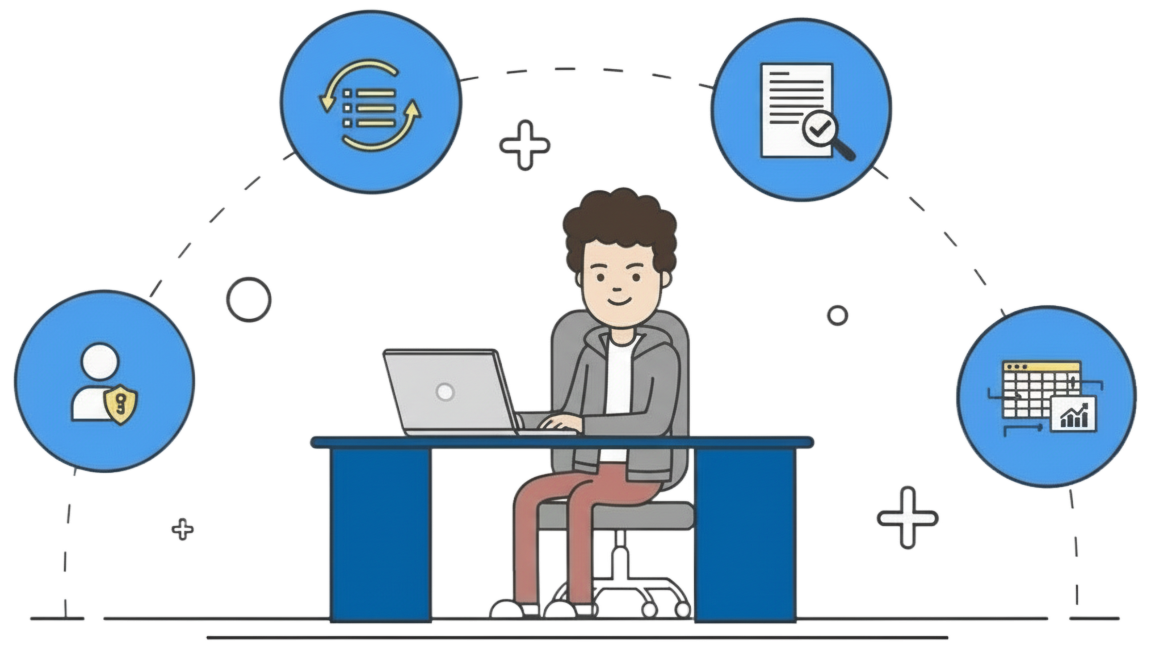
One Example of How This Works in Practice
We’ve applied this same work-lifecycle approach across a range of industries, including manufacturing, where teams manage complex, multi-stage work with strict requirements around accuracy, timing, and documentation.
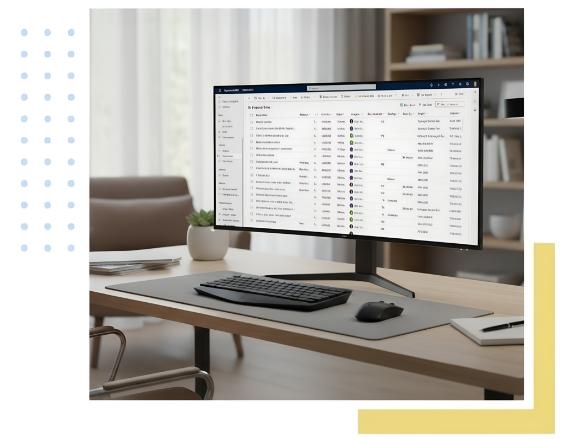
One example comes from a professional services environment, where the underlying challenges are very similar.
In this case, we built a system to manage structured, long-running work that required:
- Tracking detailed information over time
- Managing tasks and deadlines across a team
- Generating required documents
- Organizing and retaining supporting files
- Maintaining accountability as work progressed
The system is still in use today and is currently being evaluated for modernization — not because the approach changed, but because the tools have evolved.
The same pattern applies equally well to manufacturing use cases such as quality issues, engineering changes, customer service workflows, and internal approvals.
How We Build These Systems Today
Today, these solutions are built on a modern CRM and automation platform designed for flexibility and change.
We rely on a common foundation that supports:
- Configurable work structures
- AI-assisted automation
- AI-assisted analytics and insights
- Integration with existing systems
The technology supports the work — it doesn’t dictate it.
See How This Works in Practice
Short examples showing how structured work can be managed without forcing it into standard CRM cases.

These examples demonstrate how complex, multi-stage work can be managed with clarity and accountability — without rigid workflows.
How This Gets Built
Solutions like case and work lifecycle management require custom development tailored to your specific operations.
This is typically delivered through P2 Managed Services:
- We design the system around your actual workflows (not generic templates)
- Build custom forms, fields, automations, and business logic for each stage
- Create approval processes and task assignments specific to your team structure
- Integrate with document management, email, and other tools you use
- Provide ongoing optimization and support as your processes evolve
Managed Services means we become your CRM team—handling strategy, development, and ongoing refinement so you can focus on running your business.
Looking for proven operational tools instead?
If you don’t need custom case management workflows and just want better day-to-day CRM tools, explore P2 Control Layer—productized solutions like View Scheduler, Activity Center, and P2 Tags with transparent monthly pricing.
Ready to Solve Complex Work Management?
Whether you need custom case management development (Managed Services) or proven operational tools (P2 Control Layer), we can help.